For most of modern real estate history, buildings have been run on a simple, deeply human assumption: someone knows what’s going on. Someone understands the quirks of that chiller. Someone remembers why a schedule was changed three summers ago. Someone knows which alarm to ignore and which one to take seriously.
That “someone” might be a chief engineer, a long-tenured operator, a trusted vendor, or a small group of people who have grown with the building over time. And for years, this model worked – often remarkably well. Buildings functioned not because systems were intelligent, but because people compensated for their limits.
But that era is quietly ending.
What we are witnessing now is not a technology transition alone. It is a philosophical shift in how buildings must be operated at scale. A shift from human-centric operations to system-centric intelligence. And for portfolio owners in particular, this shift is no longer optional – it is foundational.
The Strength and Fragility of Human-Centric Operations
Human-centric operations are built on experience, intuition, and continuity. When they work, they work beautifully. Problems are anticipated. Shortcuts are known. Decisions are made quickly because context lives in people’s heads, not in manuals or dashboards.
But this model has a hidden fragility that only becomes visible over time.
It assumes stability: people will stay, knowledge will accumulate, and complexity will remain manageable. None of those assumptions hold anymore. Workforces are more fluid. Outsourcing and gig models are the norm. Buildings are denser with systems, sensors, and compliance obligations than ever before. And portfolios now span cities, climates, and use cases that no single human team can fully internalise.
In a single building, human-centric operations can still survive. At portfolio scale, they quietly break.
What was once strength – personal knowledge – becomes risk. What was once flexibility becomes inconsistency. Performance varies not because assets are different, but because people, vendors, and interpretations are.
Portfolio Scale Changes Everything
The moment you move from managing a building to managing a portfolio, the rules change.
A portfolio owner is not optimising one system. They are stewarding long-term value across multiple assets, each at a different stage of life, operated by different teams, under different conditions. At that level, dependency on individual expertise becomes untenable.
You cannot scale tribal knowledge.
You cannot standardise intuition.
You cannot govern memory.
Yet many portfolios still try.
They rely on periodic reviews, static reports, and anecdotal feedback to understand performance. They assume that if each building is “managed well enough,” the portfolio will take care of itself. In reality, this creates blind spots – small at first, but compounding over time.
System-centric intelligence exists precisely to address this gap.
What System-Centric Intelligence Actually Means
System-centric intelligence does not mean removing humans from the equation. It means moving the centre of gravity of understanding away from individuals and into platforms.
In a system-centric model, the building – or the portfolio – becomes the primary holder of knowledge. It remembers how it behaved last year. It understands what “normal” looks like for itself. It tracks how assets age, how usage patterns evolve, and how decisions impact outcomes over time.
Humans still make decisions. But they no longer have to reconstruct context from scratch every time. They work with systems that already understand the baseline and can explain deviations clearly.
This is a subtle but profound shift. Operations stop being about heroics and start being about consistency. Learning stops resetting with every personnel change. Performance stops depending on who happens to be on site.
For a portfolio owner, this is the difference between managing buildings and managing outcomes.
Why AI Is the Inflection Point
Digitisation laid the groundwork. AI completes the transition.
Digitised systems capture data. AI turns that data into understanding. It connects signals across time, systems, and assets. It distinguishes noise from patterns. It anticipates rather than reacts.
In a human-centric world, AI feels like an augmentation. In a portfolio context, it becomes the continuity layer – the one element that does not rotate, resign, or forget.
AI enables:
- Comparable performance insight across diverse assets
- Early detection of drift before it becomes visible as cost or failure
- Standardised intelligence even when operations are decentralised
- Decision support that scales without scaling headcount
This is not about automation for its own sake. It is about making intelligence persistent in a world where human continuity is no longer guaranteed.
The Unspoken Risk Portfolio Owners Carry
There is a risk portfolio owners rarely articulate, even to themselves: What happens if operational understanding erodes faster than assets depreciate?
Buildings are long-life investments. The systems that run them increasingly are not. People change. Vendors change. Technologies age. If intelligence is not continuously refreshed and retained at the system level, portfolios slowly lose their ability to explain their own performance.
This shows up as:
- Rising OPEX without clear causality
- ESG reporting that becomes harder, not easier, over time
- Capital planning driven by anecdotes rather than evidence
- Disproportionate reliance on external consultants to answer basic questions
None of this happens overnight. That’s what makes it dangerous.
System-centric intelligence is the antidote. It ensures that understanding compounds instead of decaying.
Why This Becomes the “Bible” for Portfolio Owners
Portfolio owners care about three things above all else: predictability, resilience, and long-term value.
Human-centric operations struggle with all three at scale. They are inherently variable. They depend on retention. They degrade quietly.
System-centric intelligence aligns naturally with how portfolios are governed. It creates a single source of truth. It enables benchmarking without bias. It allows decisions to be made with confidence rather than intuition. It ensures that learning in one building benefits the entire portfolio.
Over time, it changes the nature of leadership conversations. Reviews shift from “What went wrong?” to “What are we learning?” Capital planning shifts from reactive to deliberate. Risk becomes something that can be discussed early, not discovered late.
That is why this mindset becomes foundational. Not because it is fashionable, but because it matches the realities of scale.
This Is Not About Distrusting People
It’s important to be clear about what this shift is not.
It is not a rejection of human expertise. It is an acknowledgement of its limits in a changing world. Good operators are still invaluable. Skilled engineers still matter. But they should not be asked to carry institutional memory alone.
System-centric intelligence exists to support people, not sideline them. It frees humans to focus on judgement, strategy, and improvement rather than reconstruction and firefighting.
In many ways, it is more respectful of human skill – not less.
A Quiet, Strategic Choice
Unlike many technology decisions, this shift rarely happens through a single dramatic project. It happens quietly. Incrementally. Often without fanfare.
A portfolio begins capturing intelligence consistently.
Patterns become visible across assets.
Decisions become easier to justify.
Surprises become rarer.
And over time, something subtle but powerful happens: the portfolio starts to feel calmer. Not because nothing goes wrong – but because fewer things are unexpected.
A Closing Thought
Every generation of building operations has its operating philosophy. For a long time, it was people-centric because it had to be. Systems weren’t capable of holding context, learning over time, or explaining themselves.
That is no longer true.
For portfolio owners navigating complexity, scale, and constant change, moving from human-centric operations to system-centric intelligence is not a technology upgrade. It is a governance decision. A risk decision. A value-preservation decision.
And once you see it that way, it becomes less of a strategy – and more of a reference point.
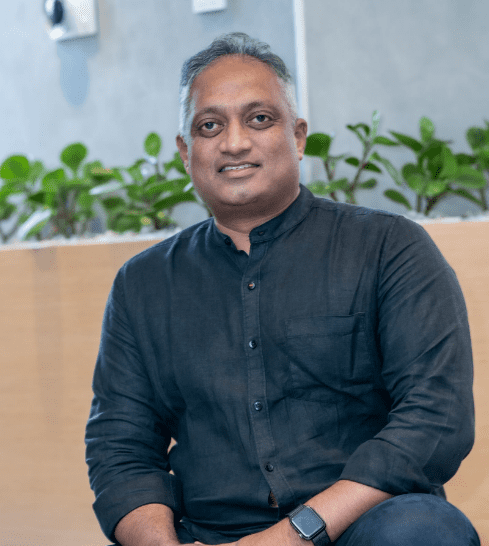
Krishna Prasad
Chief Product Officer

The views and opinions expressed in this blog are those of the author and do not necessarily reflect the official policy, position, or views of nhance.ai or its affiliates. All content provided is for informational purposes only.